
What To Do To Get Referrals: Streetlight Protects - Keep Credibility Safe
Consider a time in your business process when you can’t be the person your client interacts with directly. What are your requirements for the person representing you so they show your professionalism?
- Do they go through special training with you?
- Is there a uniform requirement?
- Do they have permission to give special access?
How do you check afterward to confirm your credibility was protected?

Response from David Arnold
from the Cumberland Team
In the real estate business we rely on many people to interact with our clients to have a successful transaction. Lenders, attorneys, inspectors, appraisers, handymen (or women), insurance agents and many more. The only way I know to be sure they represent me in a professional manner is to only select top notch professional people to work with. I am very careful to select only the best to work with my clients. This ensures that the progress and process goes as smoothly as possible on every deal.
David Arnold - REMAX Around Atlanta 770-312-5759 - David@HomerunAtlanta.com

Response from Jim Duelmer
from the Cumberland Team
Whenever I am unavailable, I make sure that there is someone on my team that is responsible to handle any pressing matters. Both my sales manager and loan officer assistant have been with me for the past 25 years and are extremely knowledgeable and responsive. I consider it a blessing and a luxury to have their support and as a result can confidently assure my clients that they will get outstanding customer service.
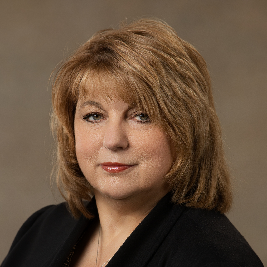
Response from Linda Carroll Cr.Photog, CPP.
from the Cumberland Team
During the holiday season, I bring in a dedicated sales consultant so I can stay fully present creating the experience. And that role is never casual—it’s intentional.
She’s not only trained in my process and products, she’s also a seasoned photographer herself. That matters, because she knows how to guide clients through image selection with a trained eye—helping them see emotion, storytelling, and what will translate beautifully into wall art and albums.
She understands my standards, my pricing structure, and how I want families to feel during that decision-making moment. There’s clear permission around access and very clear boundaries around promises.
After every session, I review the orders, the notes, and the feedback. I want to know my clients felt confident, cared for, and supported—because even when I’m not at the table, my name and reputation are.
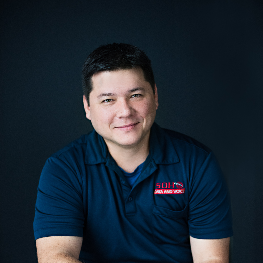
Response from Jon Ongtingco
from the Cumberland Team
All of my techs were trained by me directly and my plan has always been to remain small enough that this remains true.
We review new technology weekly and discuss scenarios and improvements we can make.
While we normally wear rugged jeans and a polo with my company logo, emergency calls and after hours calls can occasionally see streetwear if there is no way to change clothing.
All work completed is noted in our system and I can see the outcome live once the work was completed.
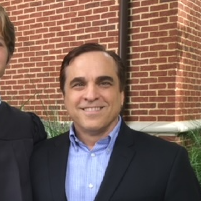
Response from Lou Beltrami
from the Cumberland Team
The attorneys in my office handle real estate closings the same way that I would because they went through special training with me. As part of that training, they observed me with clients, I observed them with clients, and we discussed everything afterwards to make sure everyone is on the same page.
When clients call with a question about their file, my office staff can usually address all of those questions since they have been trained extensively. If they do not know the answer, and the question requires an immediate response, they will get all the information from the client and a good time to call back. They then reach me and we discuss what they should tell the client. In those situations, I will follow up with a call or email to the client asking them to confirm that they got all the information they needed.
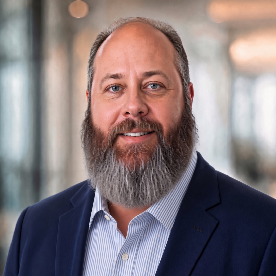
Response from Mark Chase Jr., CPA, CGMA
from the Cumberland Team
For our bookkeeping services, our clients directly interact with the bookkeepers to gather and record the transactions.
Even if we do tax adjustments, the client stays informed between the tax side and books and the bookkeepers don't automatically get access to tax returns, so the client stays in control of their books.
All of our bookkeepers have more than 10 years of experience, and that experience informs them on when to ask questions and not assume. Many times they ask me first, but they always know they can go to the client as well, so the transactions get recorded correctly.
Response from Wendy Kinney
from the PowerCore Team
Officers on a PowerCore Team are a great example of this.
Each Team has five Primary Officers, and potentially five 2nds. They go through two-and-a-half hours of training just about their role. Each role is different, so that's 12-and-a-half hours of training Team Members benefit from. (25 hours if you count 2nds.) Because no one picks up on everything, and because things change, incoming Officers attend training each term, even if they've held the role in the past.
This is what gives them Officers permissions on Harlan. They can see the Officer's Toolbox, and Leadership PowerTips in the Knowledge Base.
I get two reports on every Team each month:
- The Team Scorecard - which is like a movie, because it's fillout out by someone who is there every week.
- The Coaches Meeting Review - which is like a snapshot, because the Coach is only there once a month.
This is how I know where there's an opportunity to create success. It's also one of the ways I see who should be involved at a broader level - perhaps as a Coach, or Orientation Panelist, or Guide.
I'm grateful for all of this. Even if I'm as good as two people - even three people! - I can be as effective as four people. To grow I have to let go.

Response from Chris Garber
from the Cumberland Team
When clients are establishing new accounts I introduce them to a team of knowledgeable bankers at the branch who will be available to support them. I make these introductions via email, a Teams call, or in person. This ensures clients understand they are not solely reliant on me for future assistance and that any requests can be handled efficiently and in a timely manner.
Response from Dr. Annie Banks
from the Cumberland Team
My assistant has to be trained in Insurance clarification and decifering. They are trained about the parameters of their
responsibilites. They are trained in proper in personal and phone ettiquete to deal with incoming clients. They are trained for the
use of specific Chiropractic software, scheduling software and payment software.
My asistant is to dress in appropriate business casual attire.
They do not have permission for special access without checking with the boss first.
I know my credibility was protected by asking my assistant about the interactions they had with the client and by interacting with
my clients during their visit with me.

Response from Tom Wallace
from the Peachtree City Team
I belong to a group of financial coaches that work the same systems I do.
If there is a situation, such as illness or a family situation, that I need to be away for an extended period, we have a process within the group to hand off my clients to another coach (or coaches).
Notes are taken in a common format, and we each have access to the same resources, so there would be a seamless transition both when/if I step away and also a proper handoff again when I return.
Response from Debbie Moss
from the Cumberland Team
If the client can't reach me?
1) group text with client, myself and my roof climber.
2) reviewed with my roof climber that we will respond to client within 30 min of receiving the text
3) I review with my roof climber how important communication is with homeowner/client
a group text always keeps me in the loop

Response from Jay Frazier
from the Cumberland Team
Our team at Staff Source is all aligned with customer service being a top priority. We have weekly meetings to set expectations so that there is no gray area. The tream is cross-trained in all facets of integration, service, and follow through. Each one of us on the team has a different role but we are all able to handle the tasks related to our roles in anyones absense.
Response from Ron Goodnow
So when I am not the person the customer talks to there is a training process and a uniform requirement. This doesnt happen often if ever. When we are really busy we have had a customer service rep who was trained in customer service setting up appointments and filling out all information in the CRM system. The CRM system handles about 90% of customer interaction that we have until I can reach out.

Response from Christopher Lyboldt
from the Roswell 400 Team
There’s only one part of my business where I’m not the direct point of contact with clients and referral partners—and that’s scheduling. I handle all discovery calls, tours, and advocacy myself, but my executive assistant manages tour scheduling via email.
She’s been personally trained by me on tone, language, and expectations. Families are already stressed, so her communication has to be calm, clear, and respectful—never transactional.
She also knows exactly what she’s authorized to do and what stays with me. No advice, no assumptions—just logistics handled with professionalism.
After scheduling is complete, I step back in and reconnect with the client personally, either in a discovery meeting or on a tour at a senior living community. That way, I can confirm everything feels aligned and seamless.
My credibility matters, so even when I offload tasks, the client experience never changes. It stays consistent, compassionate, and high-touch.
Response from Queen Val Valmond
from the South Gwinnett Team
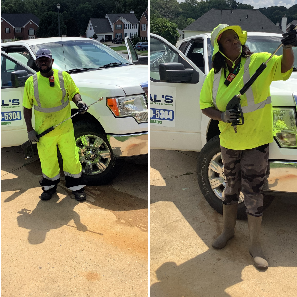
When I can’t interact with a client directly, anyone representing me must follow my standards.
-
Training: They are trained by me on how to speak to clients and what they are allowed to say or do.
-
Uniform: They must wear a clean, professional uniform.
-
Permissions: They are only allowed to handle specific tasks and cannot make decisions without my approval.
-
Follow-Up: I check in with the client afterward and review feedback to make sure my professionalism was maintained.
This ensures my clients receive the same quality experience, even when I’m not present.
Response from Alonso Lara
from the Cumberland Team
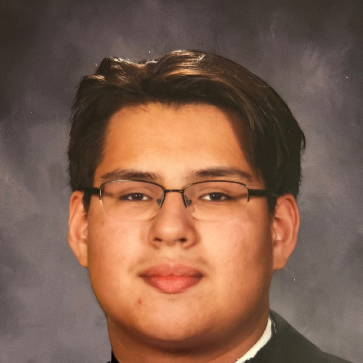
When I can’t personally interact with a client, the person representing me must meet clear professionalism standards. They go through direct training with me on customer communication, service expectations, and safety procedures. A clean, professional uniform is required to maintain trust and credibility.
Response from Nicole Austin
from the Cumberland Team
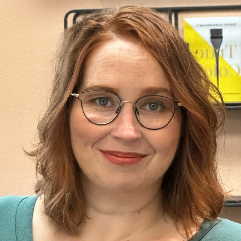
Right now, I'm still a solo-prenuer. So I am the only person my clients deal with.
But in the case that I'm able to hire someone:
I would absolutely require training with me on taking care of a customer to the best standards.
I don't think I would reuire a uniform, but dress appropriate for the job.
I don't think I would give persmission for special access. I would want to control that.
I always want to make sure that my clients know that I'm there to take care of them. And I think regular check ins during projects can keep that personal touch.

Response from Mel Selcho
from the Cumberland Team
Every business eventually gets to the place where direct contact with the owner isn't always the direct contact. I help my clients determine how they will scale and then market that process as a competitive advantage.
For instance, the owner of a home inspection company stopped doing inspections because running a company required him to be thinking about things other than the home he was in. I created a script for the customer service team to guide them when he would get requests that showed how his clients won the lottery by getting someone trained by the OG but who could remain fully attentive without distractions about how they were going to market the business PLUS the work was under the direction and quality control measures only the OG could create. Scaling actually created a BETTER result for clients than prior when the owner was the inspector.

Response from Muizz Olajide
from the Cumberland Team
If I'm unable to be the person my client interacts with. My stand in would be required to be considerate of the client and their needs to show up on time that's most important and to do what they say they will in as quick a manner as possible. They would've already shown me this by the way they interact with their own clients and what I've heard their clients say about them when I stand in for them.

Response from Cindy Boring
from the Senoia Team
At this time, I am the sole person my clients interact with. If such time in the future I am at a point to hire, these would be my answers:
1. Yes, absolutely, special training is an important part of the process of providing a consistent level of care to my clients. There are strict systems and processes in place from the very first phone call script to the Year-End Review. Since my services are remote and I am the only one that would every meet with clients, there would be no uniform requirement. There would be no special access due to the nature of confidentiality my business requires on behalf of my clients, this includes asking questions of the clients via phone or email. All of that would go thru me. Basic access to bank feeds and reconciliation processes and a complete review of completed work would be a requirement before any month end reports are sent to the client.

Response from Ledia Regis
from the Cumberland Team
Duplicate yourself through your staff.

Response from Melissa Moss CFP®
from the Towne Lake Team
Right now, I’m still the primary point of contact for my clients, and that’s by design. When someone refers a friend or family member to me, they’re trusting me with their reputation — so I’m very intentional about who represents my firm.
When others do step in, whether it’s LPL’s service teams, technology support, or an industry partner on a joint call, they’re there for a clearly defined purpose. They have access to what they need to solve the issue, but they’re not representing the relationship. I am.
Behind the scenes, I’m actively building the systems and processes that will allow me to expand that safely. Any future direct hire will be licensed, trained in our client experience, and operating from a documented playbook, not personal style.
Just like a solid financial plan, I’m designing the business systems for the outcome I want: consistent, high-touch client care even when life happens. I’m planning for continuity, not scrambling for it, even when circumstances become less than favorable. And that’s how credibility stays protected.
Response from Lacy Loyd
from the Newnan Team
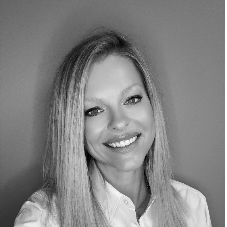
When I cannot be the person interacting with a client directly, protecting credibility matters most. Anyone representing me receives a personal heads-up about the relationship, including client preferences, communication style, plus any known likes or dislikes. That context helps them show up well.
Professional appearance is required. Logoed apparel is expected so clients clearly see alignment with my company.
Decision-making authority is handled carefully. Anything outside the norm is discussed with me one on one before a decision is made.
Afterward, I follow up personally. I listen for confidence in the conversation, check for concerns, plus confirm trust remained intact. If the client stays open and engaged, credibility was protected.
Response from Stacy Freemyer
from the Woodstock Team
Yes, My team member has training from me on how to take the orders and understanding all the ins and outs. He is also required to wear his uniform when delivering the orders. When the event is over I call the customer and make sure that everything went well if they has any questions, comments or issues that I needed to address.
Response from Robert Averette
from the Canton Business Leaders Team
“When I can’t personally interact with a client, anyone representing my business must meet strict standards.
First, they must be a a licensed agent. Then they are trained directly by me on our process, compliance boundaries, and client communication standards. They understand exactly what they can and cannot say.
Second, there is a professional presentation requirement. Whether virtual or in person, they must reflect the Guardian brand—polished, consistent, and professional.
Third, their authority is limited. They do not give advice or make decisions. They only provide approved information and facilitate the process.
To protect credibility, I audit interactions through CRM documentation, recorded communications when applicable, and client follow-ups. If anything falls outside standards, it’s corrected immediately. Trust and compliance are non-negotiable in my business.”

Response from Michal Spiegelman
In my business, I’m the one who does the coaching, the teaching, the speaking. That’s the heart of the work, and I stay personally connected to it.
Where I do lean on support is in everything that surrounds the client experience.
I have an assistant who works with me about two hours a day, and her role is to protect the container, so my clients feel taken care of even when they’re not interacting with me directly.
Here are my requirements for anyone representing me:
• They understand that every interaction is part of the client’s healing experience, not “just admin.”
• They use my tone: warm, grounded, clear, no pressure.
• They have a simple decision filter: if it impacts money, emotion, or a client’s trust, it comes to me.
• They keep strong boundaries around access. She can help, guide, and support, but she doesn’t make promises or exceptions without my approval.
What she’s trained to do:
• Student support and logistics: reminders, links, access help, scheduling coordination.
• Payment follow-up: if a payment doesn’t go through, she reaches out kindly and directly, with dignity and zero shame.
• Event support: virtual classes, in-person logistics, communication with venues.
A real example:
A few months ago I hosted a Soul-Care Retreat for Women at a state park lodge. My assistant handled the logistics and communication with the lodge from start to finish, which meant I could stay focused on what I do best: holding the space, teaching, guiding, and being fully present with the women.
How I check afterward:
After events and after any client-support situation that had emotion or complexity, we do a quick debrief. What came up, what was handled, what needs to be refined. And I also keep my finger on the pulse through what my clients share with me directly—because they always tell you, in subtle ways, whether they felt held.